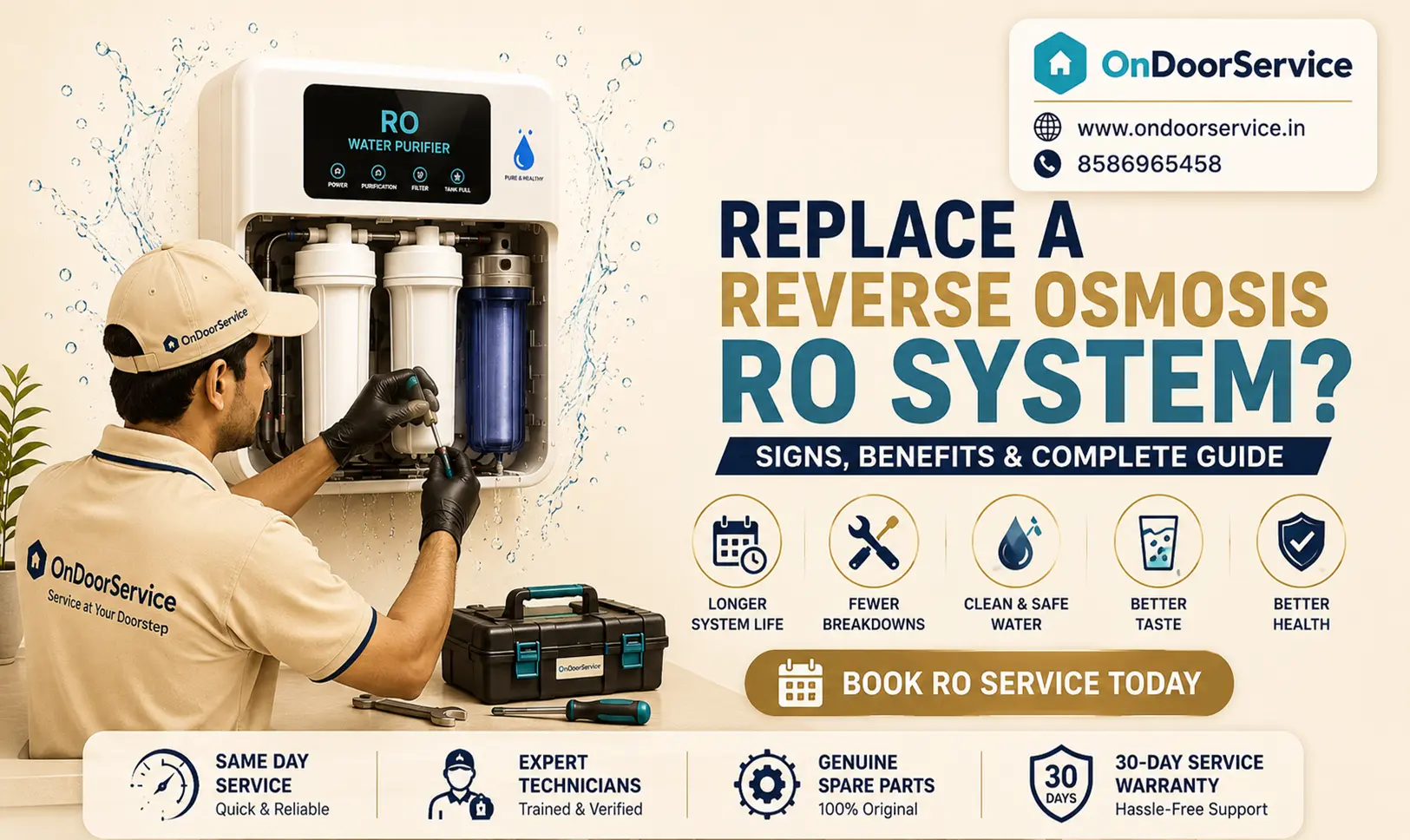
Wondering when to replace your reverse osmosis (RO) system? Most domestic RO water purifiers last between 10 and 15 years when properly maintained. However, clogged filters, an aging membrane, repeated leaks, low water pressure, poor water taste, and rising Total Dissolved Solids (TDS) are strong indicators that your RO system or one of its components may need replacement.
In many cases, replacing the membrane or filters is enough to restore performance. But if your purifier requires frequent repairs, produces poor-quality water even after maintenance, or has crossed its expected lifespan, replacing the complete RO system is often the smarter and more cost-effective choice.
Quick Answer
A reverse osmosis system should generally be replaced when it is more than 10–15 years old, develops recurring leaks, cannot maintain acceptable TDS levels, produces significantly less water, or becomes more expensive to repair than replace. Routine maintenance can extend its lifespan, but every RO purifier eventually reaches a point where replacement provides better performance and lower long-term costs.
If your purifier has started producing less water or the water tastes unusual, a professional inspection can identify whether you need a repair or a complete replacement. Homeowners looking for RO Service in Jamshedpur can have the system inspected before investing in a new purifier.
How Does a Reverse Osmosis System Work?
A reverse osmosis water purifier uses water pressure to force water through a semi-permeable membrane. During this process, dissolved salts, heavy metals, bacteria, viruses, pesticides, chlorine, and other contaminants are separated from the water before it reaches your storage tank.
A complete RO purifier normally consists of several stages of filtration, including a sediment filter, activated carbon filter, RO membrane, post-carbon filter, and in many systems, a UV or UF purification stage. Each component has its own lifespan, which is why regular maintenance is essential.
As the filters and membrane become clogged with impurities, water production gradually decreases, TDS levels increase, and overall purification efficiency drops. This is why understanding the lifespan of each component is just as important as knowing when to replace the entire RO system.
Average Lifespan of an RO Water Purifier
Not every part of an RO purifier wears out at the same time. Some filters require replacement every few months, while the main unit can continue operating efficiently for over a decade with proper maintenance.
| RO Component | Average Lifespan |
|---|---|
| Sediment Filter | 6–12 Months |
| Carbon Filter | 6–12 Months |
| RO Membrane | 2–3 Years |
| UV Lamp (if installed) | 1 Year |
| Storage Tank | 7–10 Years |
| Complete RO Water Purifier | 10–15 Years |
These estimates vary depending on the quality of your source water, daily water consumption, maintenance schedule, and whether genuine replacement parts are used.
Signs It's Time to Replace Your Reverse Osmosis System
A reverse osmosis system rarely stops working without warning. In most cases, it gradually loses efficiency over time. Recognizing these early warning signs can help you avoid poor water quality, expensive emergency repairs, and unexpected purifier failures.
If your purifier shows multiple symptoms listed below—even after replacing the filters and membrane—it may be more cost-effective to install a new RO system.
1. Water Flow Has Become Extremely Slow
One of the earliest signs of an aging RO system is a noticeable reduction in water flow. If filling a single glass takes much longer than before, the membrane, filters, storage tank, or internal tubing may be restricting water production.
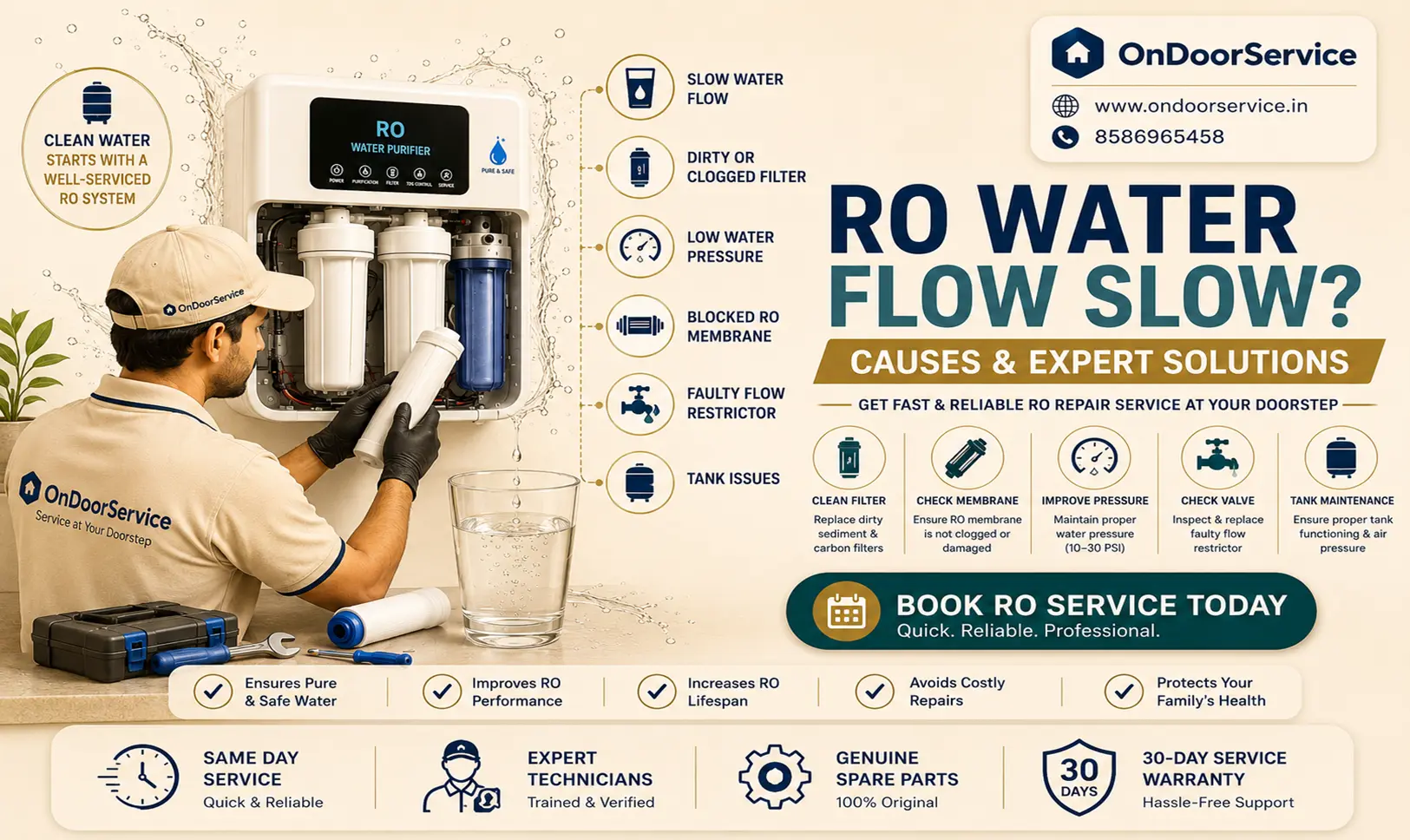
If you've already replaced the filters but the problem continues, read our detailed guide on RO Water Flow Slow. If the issue cannot be resolved, book an inspection through RO Service in Kanpur to identify whether the purifier needs repair or replacement.
2. Water Tastes or Smells Different
Purified RO water should be clean, fresh, and free from unpleasant odors. If you notice a bitter, metallic, salty, or chemical taste, the membrane or carbon filter may no longer remove contaminants effectively.
An unusual smell is another indication that bacteria, mold, or accumulated impurities may have contaminated the filtration system.
- Metallic taste
- Salty taste
- Chlorine smell
- Musty odor
- Bad aftertaste
3. High TDS After Filtration
A properly functioning RO purifier should significantly reduce the Total Dissolved Solids (TDS) level of your drinking water. If a TDS meter consistently shows high readings after replacing the filters, the membrane may have failed or the entire system may be reaching the end of its lifespan.
Checking your TDS every few months is one of the easiest ways to monitor the health of your purifier.
4. Frequent Water Leakage
Occasional leaks caused by loose fittings are common and usually easy to repair. However, repeated leakage from multiple components often indicates that the purifier has begun to deteriorate.
- Cracked filter housings
- Damaged storage tank
- Loose tubing connections
- Broken valves
- Worn-out O-rings
If your purifier leaks repeatedly despite replacing individual parts, replacing the complete unit is often the better long-term investment.
You can also read our troubleshooting guide on RO Leaking Water to identify the exact source of the leak.
5. The RO System Needs Repairs Too Often
An RO purifier that requires technician visits every few months usually costs more to maintain than it is worth. Once repair bills begin adding up, replacing the system often becomes the more economical option.
Instead of paying repeatedly for membranes, valves, tubing, fittings, and service charges, investing in a modern RO purifier can improve water quality while reducing future maintenance costs.
Should You Repair or Replace Your RO System?
Many homeowners assume they need a brand-new purifier as soon as a problem appears. In reality, replacing one faulty component is often enough. The table below can help you decide.
| Problem | Repair | Replace Entire System |
|---|---|---|
| Dirty Filters | ✔ Yes | ✘ No |
| Old RO Membrane | ✔ Yes | ✘ No |
| Storage Tank Issue | ✔ Usually | ✘ No |
| Repeated Leakage | Sometimes | ✔ Recommended |
| High TDS After Multiple Repairs | Rarely | ✔ Yes |
| Purifier Older Than 10 Years | Not Recommended | ✔ Yes |
| Frequent Breakdowns | Temporary Fix | ✔ Best Option |
As a general rule, if the repair cost exceeds 40–50% of the price of a new purifier, replacing the complete RO system usually offers better value and reliability.
How Much Does It Cost to Replace an RO System in India?
Replacement costs vary depending on the purifier brand, water quality, filtration stages, and installation requirements.
| Replacement Item | Average Cost |
|---|---|
| Sediment & Carbon Filters | ₹500–₹1,500 |
| RO Membrane | ₹1,200–₹3,500 |
| Storage Tank | ₹2,000–₹5,000 |
| Complete Domestic RO System | ₹7,000–₹20,000+ |
If you're unsure whether replacing individual parts will solve the issue, it's best to have the purifier inspected by a qualified technician. Customers looking for RO Service in Bilaspur can schedule a complete health check to determine the most cost-effective solution.
How to Replace a Reverse Osmosis (RO) System: Step-by-Step Guide
Replacing a reverse osmosis system is easier than many homeowners expect. Modern RO purifiers are designed with quick-connect fittings that simplify installation. However, careful setup is essential to prevent leaks and ensure the system produces safe drinking water.
Step 1: Turn Off the Water Supply
Close the feed water valve connected to the RO purifier and switch off the storage tank valve. Open the RO faucet to release any remaining pressure before disconnecting the system.
Step 2: Disconnect the Existing RO System
Remove the tubing one connection at a time and disconnect the drain line, inlet pipe, outlet pipe, and storage tank connection. If you're installing the same type of purifier, taking a photo beforehand can make reconnecting the new system easier.
Step 3: Install the New RO Purifier
Mount the new purifier securely and reconnect each water line according to the manufacturer's instructions. Ensure every quick-connect fitting is fully inserted and locked to prevent leakage.
Most new RO systems require flushing before the water is safe to drink. Allow the system to fill completely, then discard the first one or two tanks of purified water to remove manufacturing residues from the filters and membrane.
Step 5: Check for Leaks and Test Water Quality
Inspect every connection carefully while the purifier is operating. Once the tank has filled, test the water using a TDS meter and ensure the purifier is producing clean water with normal pressure.
Mistakes to Avoid When Replacing an RO System
Many installation problems occur because of small mistakes that can easily be avoided.
- Choosing a purifier with insufficient capacity for your family's daily water consumption.
- Using non-genuine filters or membranes.
- Ignoring the TDS level of your source water before selecting a purifier.
- Failing to flush the new membrane before drinking the water.
- Leaving old tubing connected to a new purifier.
- Ignoring small leaks after installation.
- Skipping annual preventive maintenance.
Avoiding these mistakes can significantly improve purification performance and extend the life of your investment.
How to Extend the Lifespan of Your Reverse Osmosis System
A quality RO water purifier can last well beyond ten years when maintained correctly. Preventive maintenance is far less expensive than replacing damaged components.
- Replace sediment and carbon filters every 6–12 months.
- Replace the RO membrane every 2–3 years.
- Check TDS levels every few months.
- Inspect tubing and fittings for leaks.
- Sanitize the storage tank annually.
- Use only genuine replacement filters.
- Maintain adequate inlet water pressure.
- Schedule professional servicing once or twice a year.
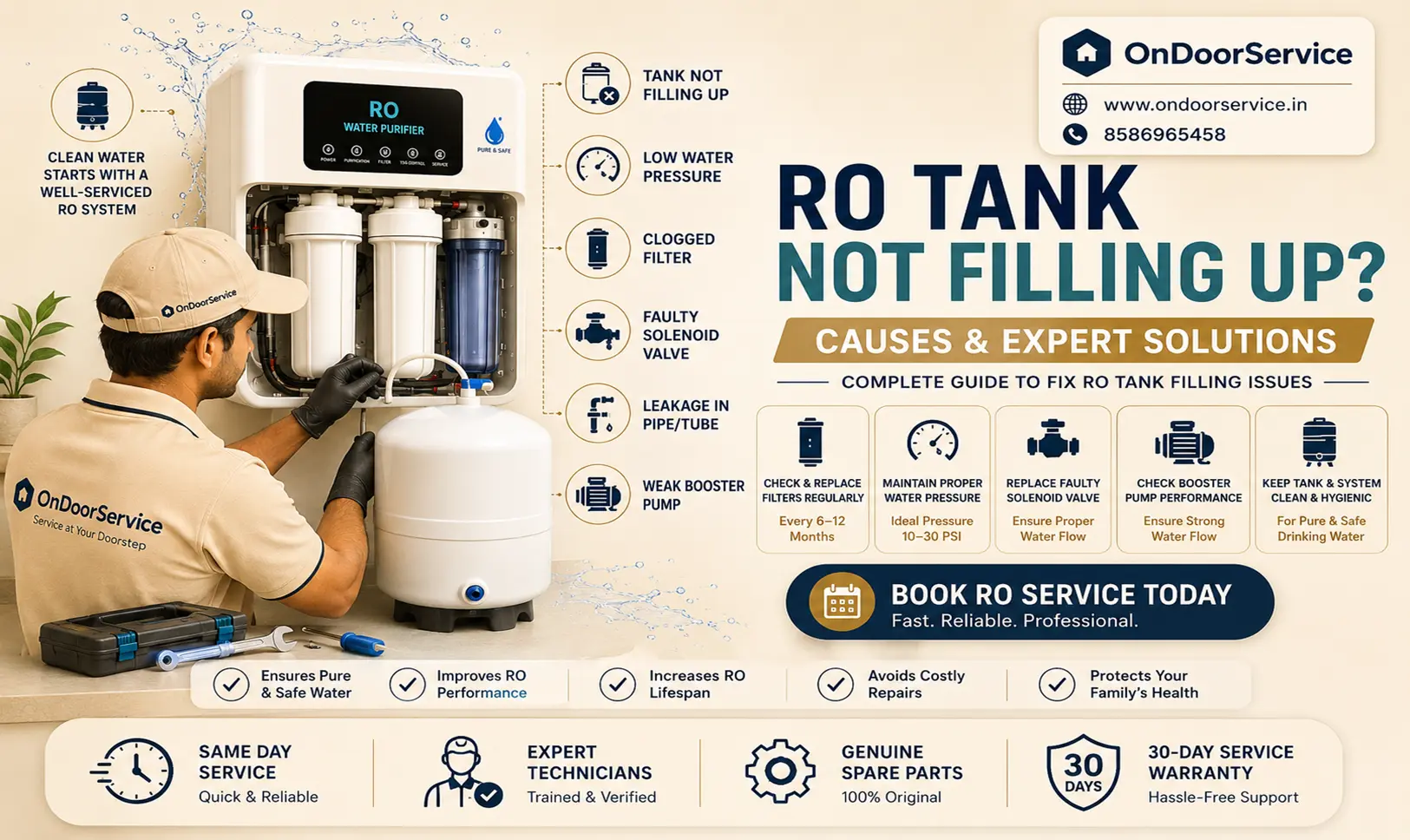
If your purifier produces less water than before, our guide on RO Tank Not Filling Up explains how storage tank problems affect water production.
When Should You Call a Professional?
Some RO problems can be solved at home, but certain situations require professional diagnosis.
- Repeated leakage after replacing fittings.
- High TDS even after installing a new membrane.
- The purifier stops producing water completely.
- Electrical issues with UV or pump models.
- Persistent bad taste or unpleasant odor.
- Major internal damage or cracked housings.
Professional servicing ensures the purifier is correctly installed, pressure-tested, sanitized, and operating at maximum efficiency.
Homeowners searching for RO Service in Gaya or RO Service in Purnia can schedule a complete RO inspection, filter replacement, membrane testing, and installation service from experienced technicians.
Final Thoughts
Knowing when to replace a reverse osmosis system helps protect your family's health and ensures your purifier continues delivering safe drinking water. While filters and membranes require periodic replacement, an aging purifier with recurring leaks, poor water quality, high TDS, or repeated repairs often reaches a stage where installing a new system is the most practical solution.
Regular maintenance, timely filter replacement, and annual professional servicing can significantly extend the lifespan of your RO purifier while reducing unexpected repair costs.
If you're unsure whether your purifier needs repair or replacement, book a professional RO Service in Rourkela, RO Service in Agra, or your nearest On Door Service location for a complete system inspection and expert recommendation.
Related RO Troubleshooting Guides
If you're experiencing other problems with your water purifier, you may also find these guides helpful:
- RO Leaking Water – Common Causes and Solutions
- RO Tank Not Filling Up – Causes and Fixes
- RO Service Frequency Guide
- How to Remineralize RO Water
- Common RO Problems and Their Solutions
- RO Water Flow Slow

Comments (0)
Leave a Comment