Your RO water purifier is one of the most essential appliances in your home, providing clean and safe drinking water for your family. But what happens when it stops working? Before you panic or call a technician, many common RO problems can be identified and sometimes fixed at home.
In this guide, we'll walk you through the 10 most common RO water purifier problems, their causes, and step-by-step solutions.
1. RO Not Producing Any Water
This is the most common complaint. You turn on the RO, but no water comes out of the faucet.
Possible Causes:
- Low inlet water pressure – RO systems need minimum 40 PSI input pressure
- Clogged pre-filters – Sediment and carbon filters blocked with impurities
- Faulty booster pump – The pump that pushes water through the membrane isn't working
- Closed feed water valve – The inlet valve might be accidentally closed
- Damaged RO membrane – A severely clogged or torn membrane blocks water flow
DIY Fix:
- Check if the inlet water supply valve is open
- Verify that there's adequate water pressure from your municipal supply
- Listen for the booster pump sound – if silent, the pump may be faulty
- Replace pre-filters if they haven't been changed in 3-6 months
When to call a technician: If the booster pump is dead or the RO membrane needs replacement.
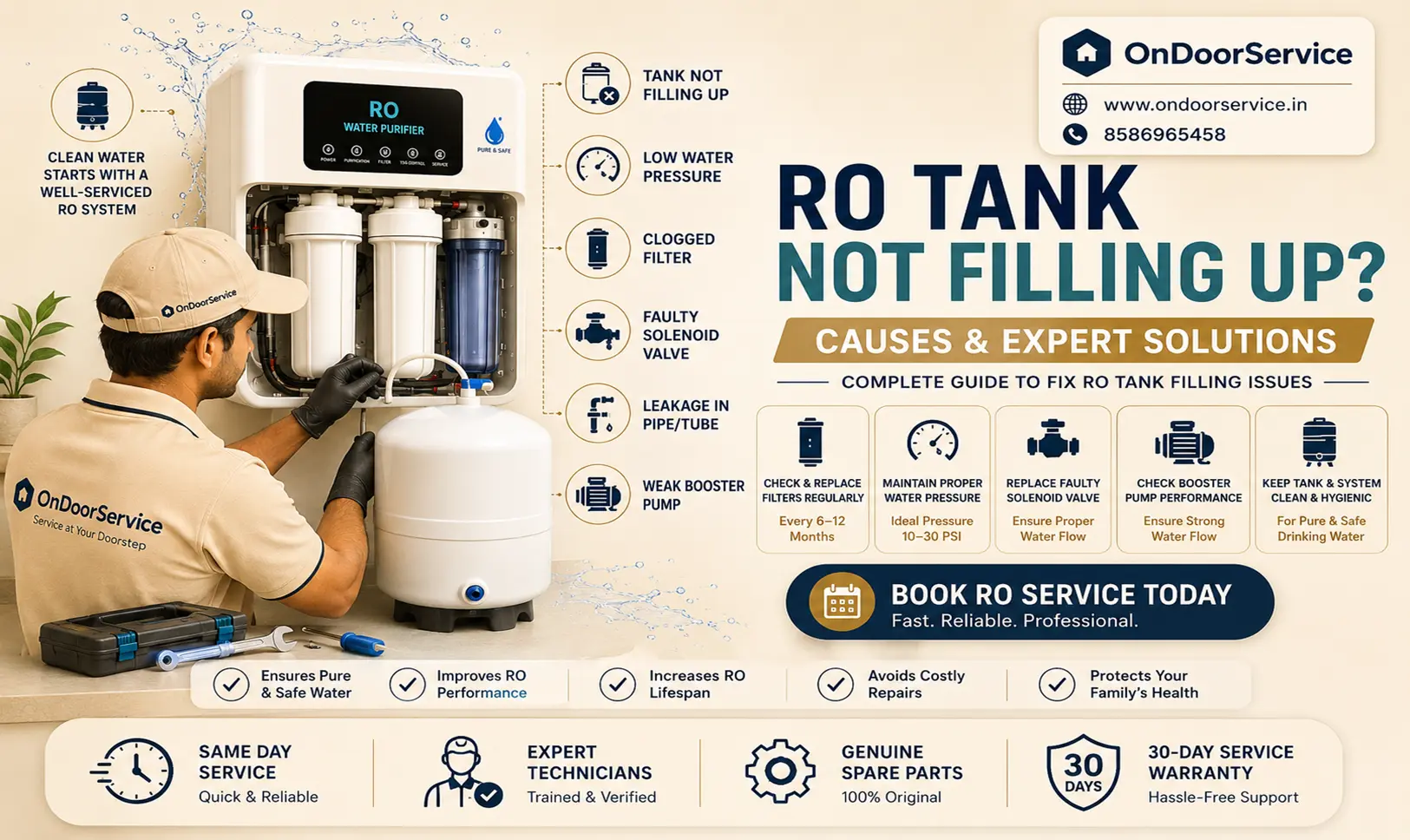
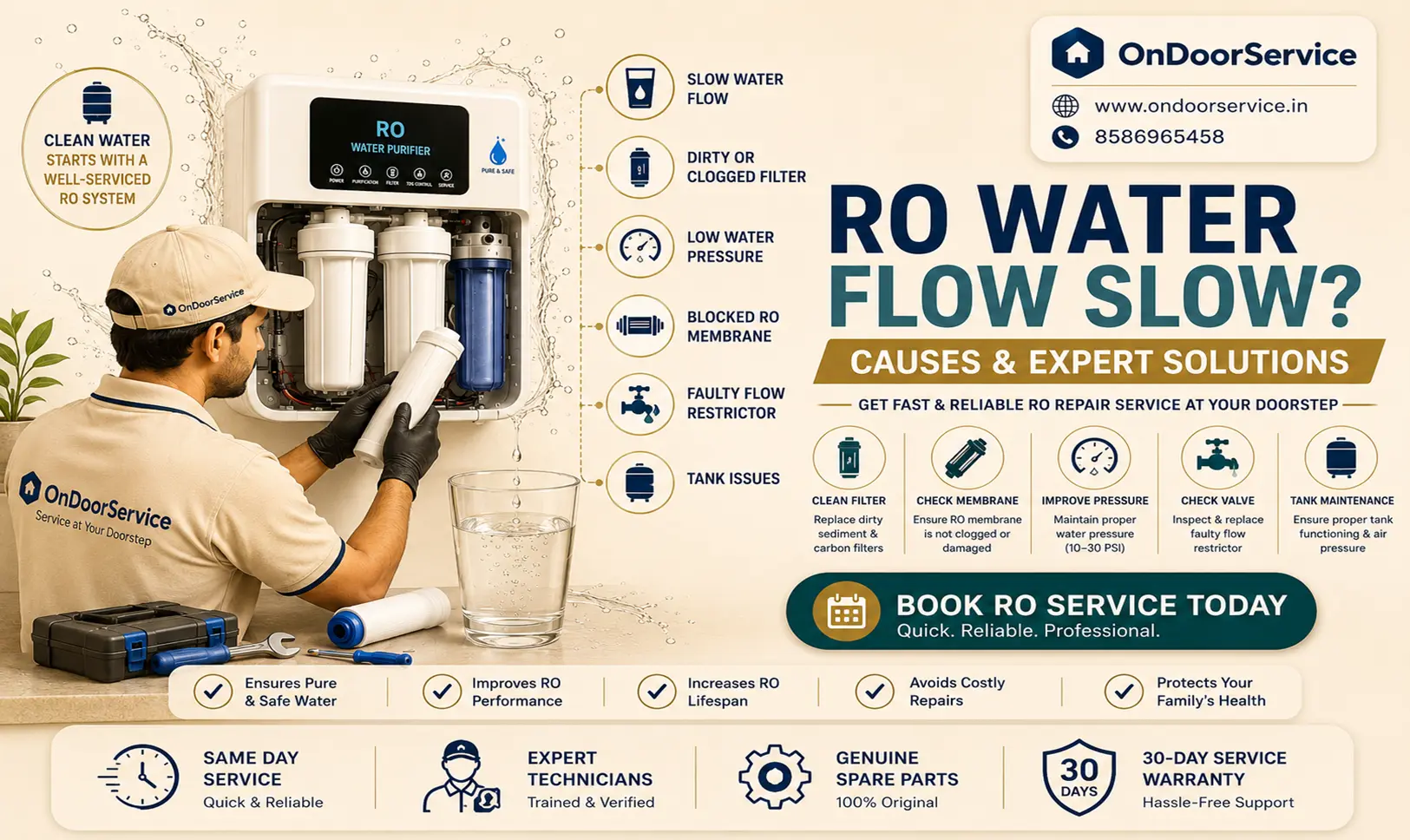
2. Slow Water Flow / Low Water Output
Your RO is producing water, but the flow is extremely slow and the tank takes hours to fill.
Possible Causes:
- Clogged filters or membrane – The most common cause of slow flow
- Low water pressure – Below the required 40 PSI
- Kinks in tubing – Bent or pinched water lines restricting flow
- Storage tank pressure issue – Low air pressure in the tank's bladder
DIY Fix:
- Replace the pre-filters (sediment + carbon) – this fixes 70% of slow flow issues
- Check all tubing for kinks and straighten them
- Check the storage tank's air pressure (should be 7-8 PSI when empty)
3. RO Water Tastes Bad or Has Odour
The water from your RO has an unpleasant taste – metallic, chemical, or stale.
Possible Causes:
- Exhausted carbon post-filter – The taste-improving filter needs replacement
- Bacterial growth in tank – Stagnant water in the storage tank can breed bacteria
- Old or damaged membrane – Not filtering contaminants effectively
- New installation smell – New filters and membrane can have a slight taste for the first few days
DIY Fix:
- Replace the post-carbon filter (recommended every 6-12 months)
- Drain and sanitize the storage tank
- Flush 2-3 tanks of water after installing new filters
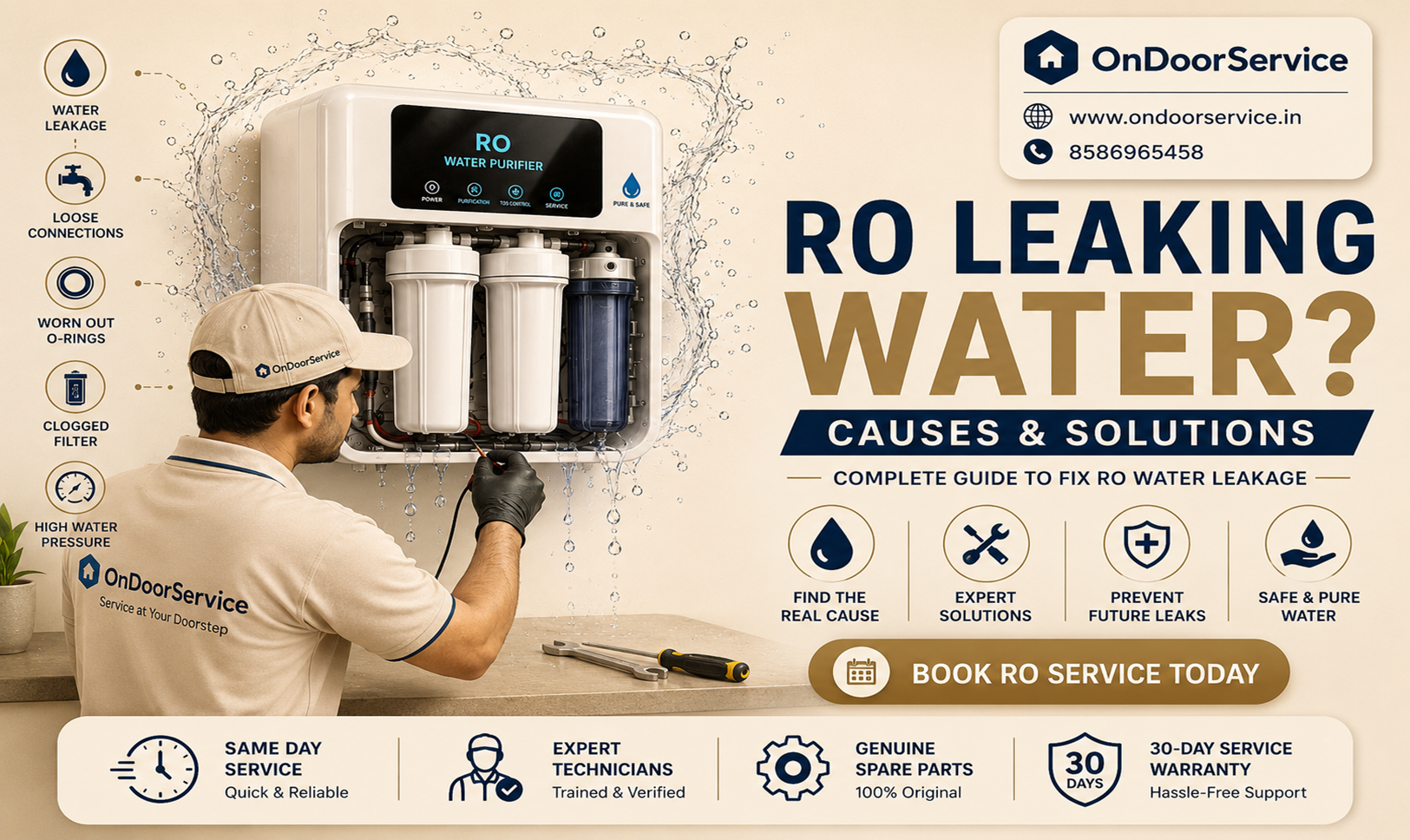
4. RO Water Purifier Leaking
Water is dripping or leaking from the RO unit, fittings, or tubing.
Possible Causes:
- Loose fittings – Push-fit connectors not properly seated
- Cracked filter housing – Over-tightening can crack the housings
- Damaged tubing – Worn out or cut water lines
- Faulty shut-off valve – The auto shut-off valve not closing properly
DIY Fix:
- Identify the exact leak point – run paper towels along all connections
- Push-fit connectors: remove, cut 1cm of tube, reinsert firmly
- Tighten filter housings (hand-tight only, don't use tools)
- Replace any damaged tubing sections
5. RO Making Strange Noise
Your RO system is producing unusual buzzing, humming, or grinding sounds.
Possible Causes:
- Air in the system – Common after filter changes or new installation
- Faulty booster pump – Worn bearings or motor issues
- High inlet pressure – Water pressure above recommended levels
- Vibrating tubing – Loose tubes rattling against surfaces
DIY Fix:
- After filter changes, let the system run for 15-20 minutes to purge air
- Secure any loose tubing with clips
- If noise persists, the booster pump likely needs replacement (call technician)
6. RO Continuously Draining Water
The RO keeps running and draining water even when the tank is full.
Possible Causes:
- Faulty auto shut-off valve (ASO) – Not detecting when tank is full
- Damaged check valve – Allows backflow from the tank
- Low tank air pressure – Tank can't build proper pressure to trigger shut-off
DIY Fix:
- Check tank pressure with a bicycle pump gauge (should be 7-8 PSI when empty)
- Re-pressurize the tank if needed using a bicycle pump via the Schrader valve
When to call a technician: Auto shut-off valve and check valve replacement requires professional service.
7. Foul Smell from RO Water
A rotten egg or sulfur-like smell from the RO water.
Possible Causes:
- Bacterial contamination in the storage tank or tubing
- Hydrogen sulfide in the source water (common in borewell water)
- Stagnant water – RO not used for several days
DIY Fix:
- Drain the entire tank and flush with clean water
- Replace all filters and sanitize the system
- If using borewell water, consider adding a UV or UF stage
- Use the RO daily to prevent stagnation
8. TDS Level Too High After Purification
The TDS (Total Dissolved Solids) of purified water is higher than expected.
Possible Causes:
- Worn out RO membrane – Membrane typically lasts 2-3 years
- TDS controller set too high – Mixing too much bypass water
- High source water TDS – Input water TDS above 1500-2000 PPM
DIY Fix:
- Check output TDS with a TDS meter (ideal range: 50-150 PPM)
- Adjust the TDS controller knob to reduce bypass water mixing
- If TDS is still high, the membrane needs replacement
9. RO Indicator Light Blinking or Not Working
The LED indicators on your RO panel are behaving abnormally.
Possible Causes:
- Power supply issue – Faulty SMPS/adapter
- Filter change alert – Some ROs blink to indicate filter replacement is due
- PCB board issue – The electronic control board is malfunctioning
DIY Fix:
- Check if the power adapter is properly plugged in
- Try a different power outlet
- Reset the filter change indicator (refer to your model's manual)
10. UV Light Not Working
In RO+UV systems, the UV lamp may stop working, reducing purification effectiveness.
Possible Causes:
- UV lamp burnout – UV lamps typically last 8,000-10,000 hours (about 1 year)
- Faulty UV chamber – The quartz sleeve may be cracked or dirty
- Electrical issue – UV ballast or wiring problem
DIY Fix:
- Check if the UV lamp glows when the RO is running (look through the UV chamber)
- UV lamp replacement is straightforward – buy the correct model and swap it out
- Clean the quartz sleeve with a soft cloth if it's cloudy
RO Maintenance Schedule
Follow this maintenance schedule to keep your RO in perfect condition:
| Component | Replacement Frequency | Approximate Cost |
|---|---|---|
| Sediment Filter | Every 3-6 months | ₹150 – ₹300 |
| Carbon Filter | Every 6-12 months | ₹200 – ₹400 |
| RO Membrane | Every 2-3 years | ₹1,500 – ₹3,000 |
| UV Lamp | Every 1 year | ₹400 – ₹800 |
| Post Carbon Filter | Every 6-12 months | ₹200 – ₹500 |
| Mineral Cartridge | Every 6-12 months | ₹300 – ₹600 |
When to Call a Professional Technician
While many RO issues can be diagnosed at home, call a professional when:
- The booster pump needs replacement
- The auto shut-off valve is faulty
- You suspect an internal leak
- The PCB/electronic board is malfunctioning
- RO membrane replacement is needed
- You're not comfortable with DIY fixes
Get Expert RO Repair from OnDoorService
At OnDoorService, our certified water purifier technicians can diagnose and fix any RO problem at your doorstep:
- All brands serviced: Kent, Aquaguard, Livpure, Pureit, Havells, and more
- Genuine spare parts with warranty
- Transparent pricing – no hidden charges
- Same-day service available
- 90-day service warranty
Call 8586965458 or book RO repair online for fast, reliable service.
Comments (0)
Leave a Comment