There is nothing quite as frustrating as turning on your air conditioner on a sweltering hot day, expecting a blast of icy relief, only to discover that it is blowing uncomfortably warm air. You lower the thermostat, wait patiently, and adjust the remote settings, but the room remains hot and stuffy. If you are left desperately wondering, "Why is my AC not cooling properly?" you are certainly not alone. It is one of the most common issues homeowners face during peak summer months.
An air conditioner is an intricate, highly pressurized system of interconnected mechanical and electronic parts. The cooling mechanism relies on exact airflow and chemical reactions, meaning when even one tiny component fails or gets dirty, the entire cooling process is compromised. The good news? While some major problems definitively require professional intervention, others can be resolved with simple, routine maintenance. In this comprehensive guide, we will explore the exact underlying reasons your AC is failing to cool, how to effectively troubleshoot the issue, and when it is time to call upon the trusted, experienced professionals at Ondoor Service.
Common Reasons Why Your AC Is Not Cooling
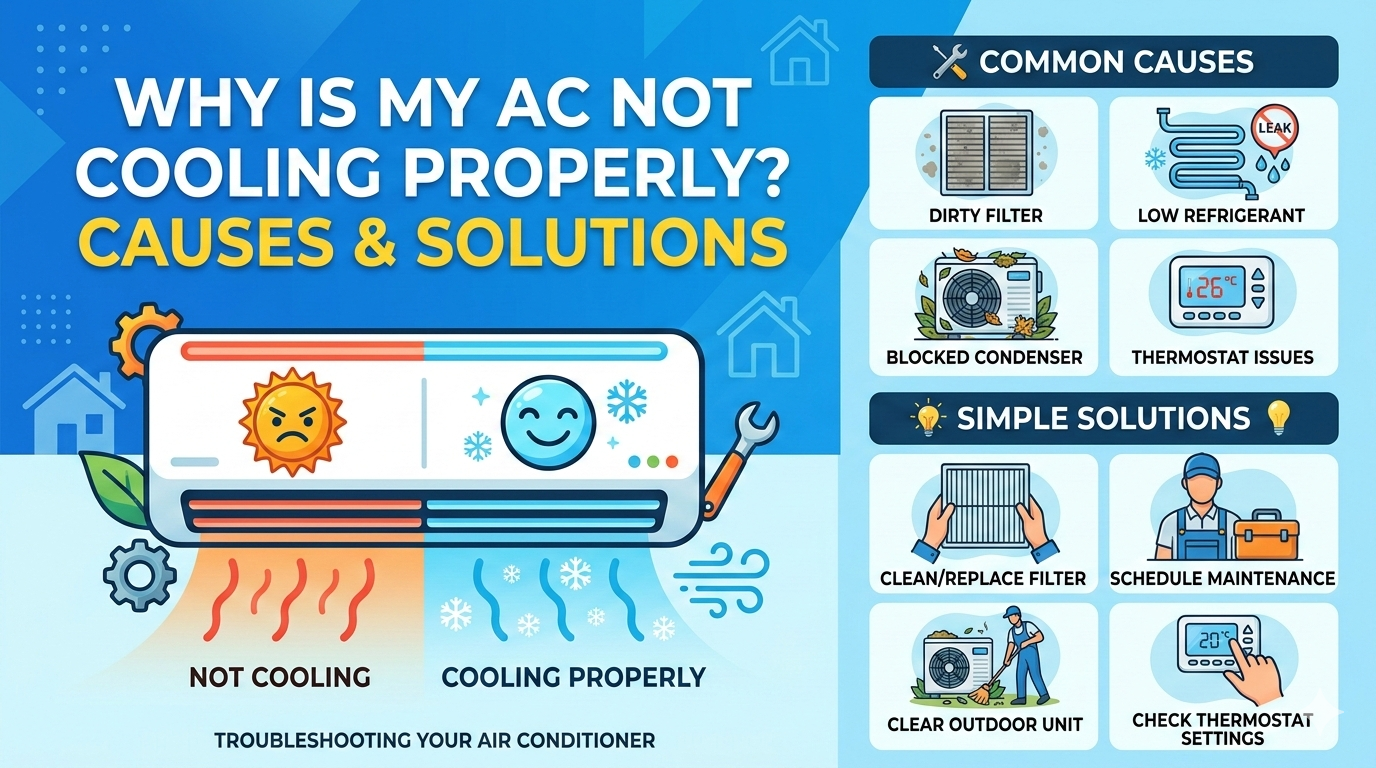
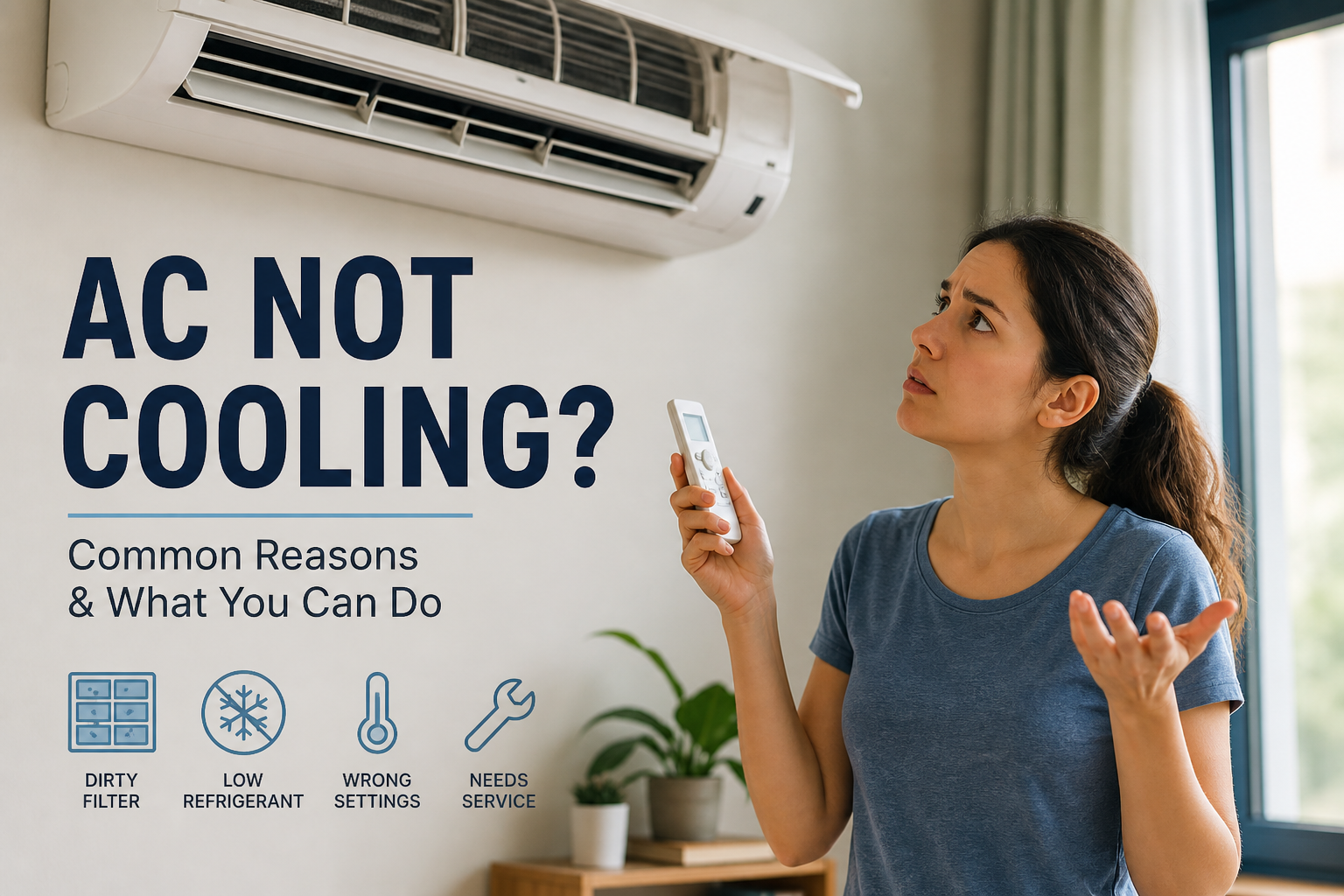
Diagnosing the root cause of your air conditioning problem is the first crucial step toward restoring breathable comfort to your home. If your AC is blowing warm air, the culprit is likely one of the following:
1. Dirty Air Filters
This is arguably the most frequent—and easily preventable—reason an AC abruptly stops cooling properly. The air filter's primary job is to trap dust, pet dander, pollen, and debris, preventing them from entering the sensitive internal system. Over weeks of usage, these particles form a thick blanket that blocks the airflow over the cold evaporator coils. This restricted airflow essentially suffocates the system and can cause the internal coils to freeze solid into a block of ice, completely halting the cooling process.
2. Low Refrigerant Gas
Refrigerant (frequently referred to as AC gas or Freon) is the vital chemical liquid that physically absorbs the heat from inside your room and releases it outside. It is important to know that your AC does not "consume" or burn up refrigerant like fuel; it continuously circulates inside a sealed loop. Therefore, if your system is suffering from low refrigerant gas, it means there is a physical crack or leak somewhere in the copper cooling lines. When gas levels drop, the AC loses its ability to pull heat, resulting in weak, warm air blowing from the vents.
3. Thermostat Problems
Sometimes, the bulky AC unit itself is in perfect working condition, but the small thermostat controlling it is malfunctioning. If the thermostat sensor is broken or miscalibrated, it will not read the room temperature accurately. It might falsely signal the compressor to shut off long before the room is cooled. Additionally, a remarkably common user error is accidentally setting the remote to "Fan" or "Dry" mode instead of the essential "Cool" mode.
4. Compressor Issues
If the air filter is the lungs of your system, the compressor is the heart. Located in the outdoor unit, the compressor is responsible for pumping and circulating the refrigerant between the indoor and outdoor coils. If the compressor is failing—due to electrical issues, overheating, age, or wear and tear—the cooling cycle physically cannot take place. Because the compressor is a highly complex, high-voltage component, diagnosing and repairing it mandates the skills of an expert AC technician.
5. Dirty Condenser Coils
Take a look at the outdoor unit of your AC; it houses the large condenser coils. These metallic coils are responsible for taking the heat absorbed from your bedroom and expelling it into the outside air. Because this unit lives outdoors 24/7, the coils are constantly exposed to dust, mud, falling leaves, and heavy pollution. When these coils become thickly coated in grime, they are insulated and cannot release heat effectively. As a result, the AC compressor works overtime, overheats, and your indoor cooling performance drops dramatically.
6. Blocked Airflow
Cooling issues can also arise from blocked airflow in the room itself. Ensure that heavy furniture, dense curtains, or decorations are not blocking the indoor AC vents. For the outdoor unit, there must be at least two to three feet of empty clearance away from walls, bushes, or rubbish to allow the exhaust fan to push hot air away effectively.
Signs Your AC Needs Immediate Repair
While a lack of cooling is the most obvious sign of trouble, air conditioners usually exhibit warning signs before they suffer a major mechanical breakdown. Be vigilant and look out for these symptoms:
- Unusual Noises: Loud grinding, squealing, or metallic rattling sounds usually indicate failing motor bearings, loose fan belts, or debris caught in the system.
- Foul Odors: A damp, musty smell points to mold and mildew growing on the wet evaporator coils, while a sharp burning smell is an emergency indicator of melting wires or an electrical hazard.
- Frequent Cycling: If your AC is constantly turning on and shutting off every few minutes without adequately cooling the room (known as short-cycling), the compressor is struggling heavily.
- Water Leaks: Water dripping down your indoor wall means the condensate drain pipe is completely clogged, or a frozen evaporator coil is melting rapidly.
- High Electricity Bills: A sudden, unexplained spike in your monthly power bill means your AC is working unsustainably hard to try and cool the space due to deep internal inefficiencies.
Step-by-Step Troubleshooting Guide
Before you jump the gun and book an AC repair service, try these very safe, simple troubleshooting steps to see if you can resolve the issue yourself:
- Check the Thermostat: Verify that the mode is definitively set to "Cooling" (often indicated by a snowflake icon) and that the temperature is set at least 3-4 degrees lower than the current room temperature.
- Clean the Air Filters: Carefully open the front plastic panel of your indoor unit. Slide out the mesh air filters, wash them gently but thoroughly under lukewarm running water, let them dry completely in the shade, and reinstall them.
- Inspect the Outdoor Unit: Safely observe the outdoor compressor unit. Without touching the electrical components, clear away any visible leaves, plastic bags, or debris blocking the fan grille.
- Check the Power Supply: Ensure that the AC plug is securely pushed into the wall socket and that the main electrical circuit breaker in your house has not tripped.
If you have checked off this list and your air conditioner is still stubbornly blowing warm air, it is time to cease DIY efforts and seek professional diagnostic help.
When You Should Call a Professional Technician
Air conditioning systems deal with highly pressurized chemicals and potentially lethal 240V electricity. You should immediately turn off your unit and call a professional appliance technician if:
- You suspect a refrigerant gas leak. By law and safety standards, handling and disposing of refrigerants requires specialized equipment and licensing.
- You hear violent, mechanical screeching or grinding noises coming from the compressor.
- The AC is "icing up," meaning there is visible, solid white frost or ice building up on the indoor coils or the outdoor copper pipes.
- The unit instantly trips your home's electrical circuit breaker every single time it tries to turn on.
Ignoring these high-risk issues or attempting to fix them with zero training can lead to permanent motor destruction, electrical fires, and incredibly costly replacements.
AC Repair Service Near You
When you are sweating and stressed in the severe heat, you need a highly reliable, incredibly fast AC repair service you can trust without second thoughts. Ondoor Service provides premium, doorstep AC repair and maintenance to get your sophisticated cooling system back to peak factory performance.
Our certified, vastly experienced experts are fully equipped to handle all major AC brands, including LG, Samsung, Daikin, Voltas, Blue Star, and more. From deep jet-pump cleaning and leak repairs to complex compressor replacements and precise gas refilling, we have you completely covered.
Need Urgent AC Repair Service?
Don't suffer in the stifling heat. Get your AC fixed by certified experts today!
Call Now: 8586965458
Book Doorstep Service OnlineWhy Choose Ondoor Service for AC Repair
The market is flooded with local handymen, but choosing an established, fully accountable professional service makes all the difference in the lifespan and safety of your expensive appliance. Here is exactly why Ondoor Service is your premium choice:
- Same Day Service: We highly value your comfort. Our technicians are dispatched rapidly and arrive promptly to restore your cooling on the very same day of booking.
- Experienced Technicians: Our team solely consists of highly trained, thoroughly background-verified professionals who specialize in the latest inverter and smart AC technologies.
- Affordable Pricing: We firmly believe in honest, transparent, and upfront pricing. There are absolutely no hidden charges—you only pay for the service you authentically receive.
- Doorstep Service: Taking down a heavy AC unit is a nightmare. You don't have to lift a finger; we bring the entire repair workshop directly to your living room.
- Genuine Spare Parts: We strictly use 100% genuine, OEM-approved spare parts. This ensures ultimate durability and is backed by a robust service and parts warranty.
AC Maintenance Tips to Improve Cooling
As the saying goes, prevention is always better—and significantly cheaper—than major repairs. Follow these pro maintenance tips to keep your AC blowing ice-cold air efficiently for years to come:
- Clean Filters Regularly: Get into the habit of washing your indoor AC mesh filters every 2 to 4 weeks during heavy summer usage.
- Manage Heat Sources: Do not place lamps, large televisions, or other heat-generating electronics near your AC's thermostat. The false heat reading will cause the AC to overwork unnecessarily.
- Schedule Annual Servicing: Book a professional deep chemical or jet-pump cleaning with Ondoor Service right before the summer season begins to clear out winter dust build-up.
- Seal Your Room: Ensure that all windows and doors are firmly closed to prevent precious cool air from escaping out into the hallway. Utilize heavy blackout curtains to block out radiant heat from the hot afternoon sun.
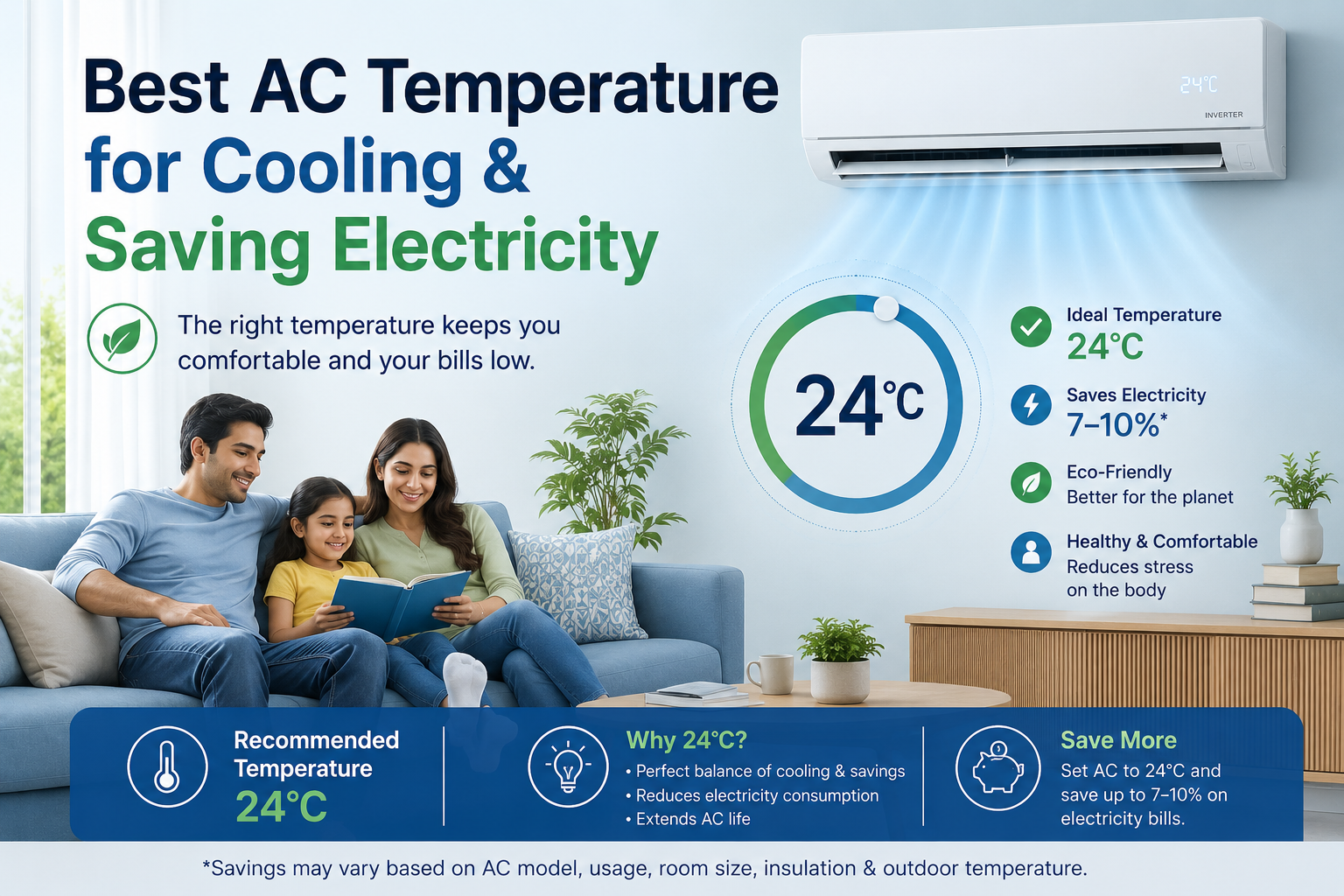
- Give it a Break: Use the sleep timer function at night to give the compressor a well-deserved rest once you fall asleep. This vastly extends the compressor's life and slashes your massive energy bills.

Comments (0)
Leave a Comment